Home » Hex Bolt Installation Guide | A Complete Guide
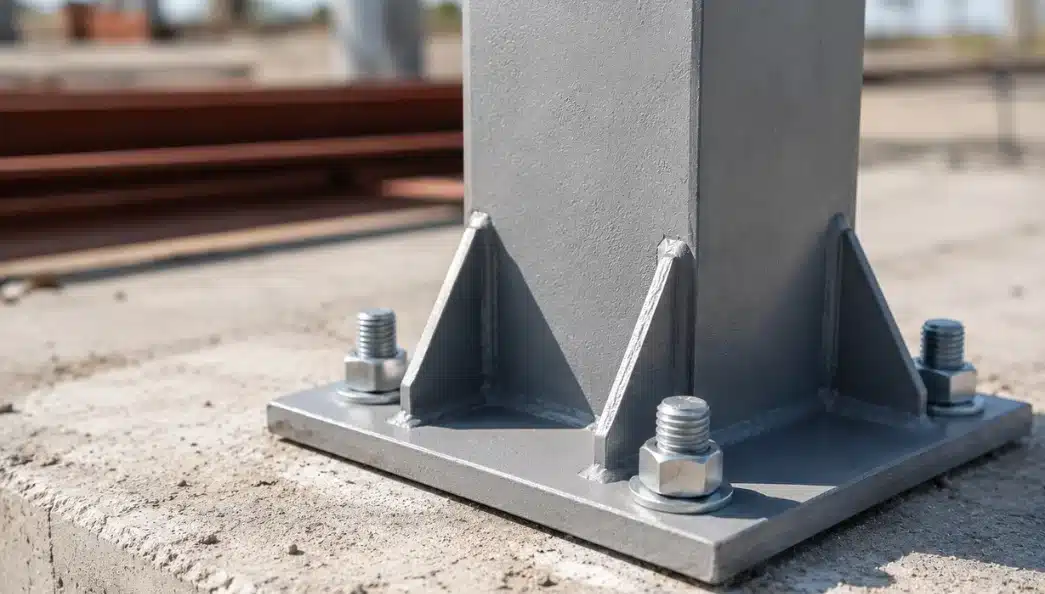
Whether you are putting up steel frames, connecting water pipes, or fixing heavy machines for oil and gas projects, you must know how to use a hex bolt. Doing this right is a key skill for any worker on a job. When a bolt stays too loose, it can wobble and drop off later. But if you twist a bolt too hard, it can snap, strip its ridges, or crush the objects you are holding together. Both errors cost lots of cash and can hurt people at work. This hex bolt installation guide shows you all the basics: what this bolt is, the gear you need, how to put it in, how hard to twist it, bad habits to avoid, and how to keep them working.
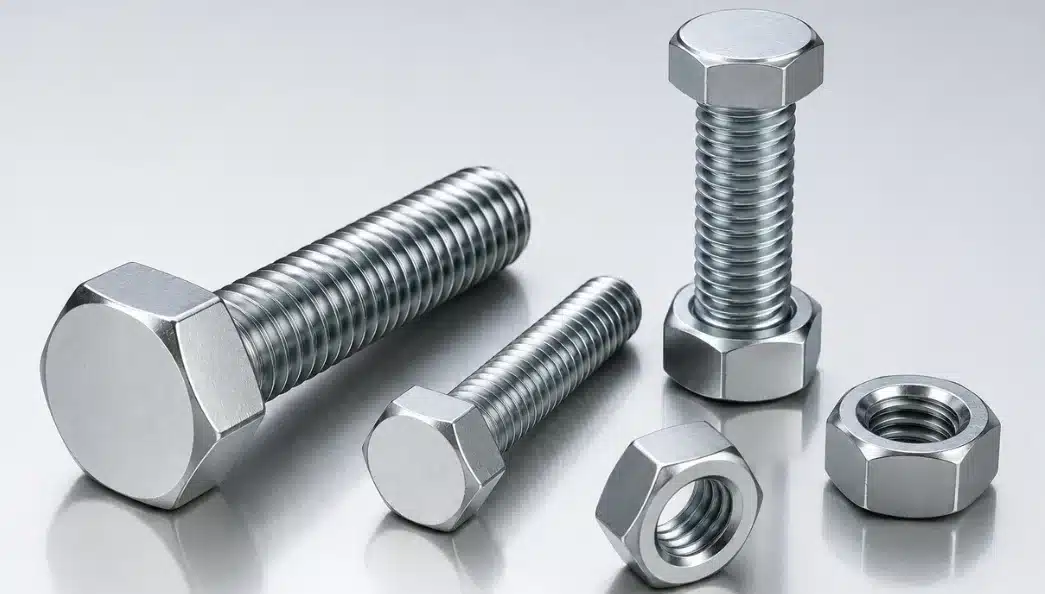
A hex bolt is a tough pin with a six-sided top and a body full of ridges called threads. You use a handy wrench or a socket tool to hold the top and turn it. The ridged body spins into a nut or a matching hole. This action squeezes two or more parts together so they cannot move. Workers make these bolts out of many types of metal. This helps them fit different jobs and carry heavy loads without breaking. At Petrofast Middle East FZC sells hex bolts made of tough carbon steel, mixed alloy steel, and clean stainless steel are available. They even sell unique metals made for very hot spots or places that get rusty fast. These bolts come with many outer layers like hot zinc dip, shiny zinc plate, yellow coat, dark black finish, or bright stainless metal. Every special coat helps stop wet weather and rust from destroying the bolt.
Having the right tools on hand before you begin makes the process faster, more accurate and safer. Below are the main hex bolt tools used in a typical installation:
This bolt installation guide will help you get it right and reliable every time.
Check visually and dimensionally before installing any bolt. Confirm:
Ensure that the bolt / nut and washer combination are compatible. Incorrect components can result in inaccurate torque readings and joint failure. In structural applications, the nut grade should be the same as the bolt grade and a flat washer should be used to distribute the clamping load properly.
Rub a good grease or a special anti-stick paste onto the bolt ridges if your project gets very hot, sits in wet weather, or uses stainless steel. This step is super important for extra-strong stainless metals. If you spin those bolts too fast while they are dry, the metal can heat up, scrape, and lock up before it is even tight.
Put the bolt into the hole and spin it with your fingers until it sits tight against the flat washer and the joint wall. Do not use any tools for this part. The main goal here is to make sure the bolt goes in straight and lines up perfectly so you do not ruin the metal ridges.
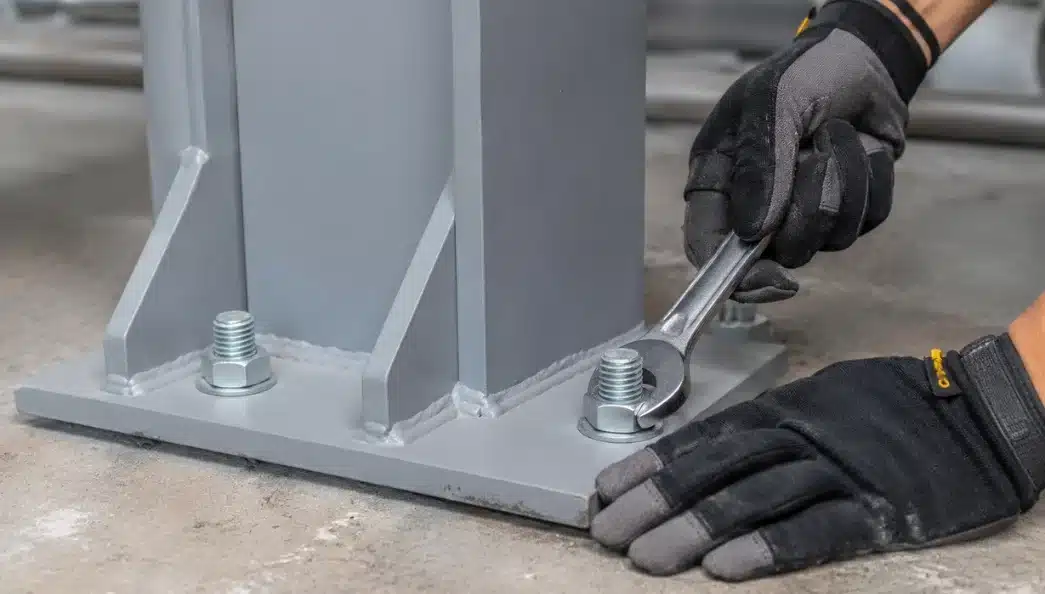
Take your hand wrench or power tool and tighten all the bolts until they are snug. This means they are firm, but not at their final tightness yet. If you are working on a piece with many bolts, like a pipe ring or a base plate, always tighten them in a crisscross or star-shaped pattern. This spreads the squeezing force evenly.
Use a special tool called a torque wrench that measures tightness. Twist each bolt until it hits the exact number you need. Keep using that same crisscross pattern for joints with many bolts. Never skip a bolt and never tighten them in a simple circle, because that makes one side way too heavy and uneven.
Look over the tightness one last time with your wrench if your job rules tell you to. Then, draw a straight line across the nut and the bolt head using a paint marker. This line acts as a witness mark, so anyone can look at the bolt later and see if it has started to loosen or spin out of place.
The single most important aspect of a successful installation is to nail the hex bolt torque. Torque is the turning force you apply to the bolt and is what generates the clamping force in the joint.
industrial bolt installation can be a source of mistakes, even for seasoned technicians. Here are the most common problems and how to avoid them:
The critical mistake is installing a lower grade bolt in place of a higher grade. Always compare the required grade to that shown on the engineering drawing. If a lower strength bolt is used, the load capacity of a structural connection is greatly reduced and the joint may fail.
Excessive torque can strip threads, stretch the bolt beyond the elastic limit, or crack the bolt shank. Always use a calibrated torque wrench and follow the values indicated for each grade. High tensile hex bolts UAE are particularly susceptible to over-tightening due to their very specific hardness range, which, if exceeded, compromises the integrity of the fastener.
A bolt that is not tightened enough will not develop the necessary clamping force and can loosen due to vibration or thermal cycling . This is especially true where technicians are using feel rather than a torque wrench.
In any multi-bolt joint such as flanges, base plates or structural connections, tightening the bolts in the wrong sequence causes uneven load distribution and can bow or warp the joint face. Always go in a star or cross pattern.
In mixed-standard environments, which are common in the UAE and the wider GCC region, metric bolts could be accidently paired with imperial nuts, and vice-versa. This will damage threads and give you a false sense of tightness. Always check thread standards prior to assembly.
Over time galvanic corrosion can occur when dissimilar metals are used together, for example a galvanized bolt and a stainless steel nut. Match surface finishes and materials to each other and the environment.
Industrial hex bolt installation in construction, oil & gas, and manufacturing involves more than just the basic procedure.
Alloy steel bolts and matching heavy hex nuts are common in piping and flange applications, which is the core application of Petrofast Middle East. The mechanical properties of these grades should be verified by mill test reports and material traceability documents before installation on critical services.
High tensile hex bolts are available in lower hardness grades and stainless steel grades for corrosive or sour gas environments specifically designed for environments where hydrogen stress cracking is an issue.
high-strength structural bolt assemblies are the first choice for structural bolts installation in steel frame buildings, bridges and industrial platforms. These include a wide range of minimum tensile strength requirements and consolidate several legacy bolt specifications into a single governing standard.
Surface finish options for structural applications are Black (plain), Hot Dip Galvanized (HDG) and Electro Zinc Plated and all are available at Petrofast Middle East.
The great majority of applications for general construction and steel fabrication are covered by DIN-specified and ISO-specified hex bolts in mid-range strength classes. The Hot Dip Galvanized finish is more corrosion resistant than zinc plating and is preferred for outdoor and exposed applications.
Installation is not the end of the process. In industry, bolted joints need to be inspected and serviced from time to time.
Look for obvious corrosion, especially around the bolt head and under washers where water collects.
Periodic re-torquing of critical joints might be required, especially following initial thermal cycles which tend to relax the clamping force.
Replace any bolt with damaged, corroded or galled threads immediately. Never re-use a stretched bolt or one that shows signs of plastic deformation.
Check galvanized or zinc plated bolts for coating damage. Once the protective layer is broken, the corrosion accelerates rapidly.
Specialty alloy bolts (duplex, super duplex, nickel alloy) in oil & gas and chemical processing environments should be verified by PMI testing to verify the correct material prior to installation and periodically thereafter. To achieve this, Petrofast Middle East’s quality laboratory has PMI capability.
For replacement bolts and ongoing supply needs, Petrofast Middle East FZC has the full range of hex bolt specifications, and asks for traceability documentation.
pipeline or equipment. The right grade, the right torque, the right sequence, they are not optional steps. They are the difference between a joint that lasts for decades, and one that fails at the worst possible moment.
You can install with confidence knowing that every hex bolt leaving the plant at Petrofast Middle East FZC has full material traceability, verified mechanical properties and compliance to international specifications.
Looking for hex bolts that are a perfect fit for your project? Get a quote, technical data sheets and fastener advice from experts in your industry by contacting the Petrofast ME team today.
Most general structural applications use medium strength hex bolts. Critical joints that require higher clamping force, vibration resistance or a reduced number of bolts use high strength grades.
Washers are recommended under the nut and often under the bolt head also in many industrial and structural applications. Washers distribute the clamping load over a greater area, protect coatings and increase torque accuracy greatly.
The PTFE coated bolts exhibited less thread friction than the dry or zinc plated bolts. That is, the same torque will generate a higher clamp force. Torque values normally should be reduced 20 to 30 percent from dry installation values to prevent overstressing the bolt.
Do not reuse the hex bolts in high-load structural or pressure applications. A fully tensioned bolt may have experienced some plastic deformation and thus its behaviour during a second installation is unreliable and could be unsafe.
Do not torque the flange bolts in a circle. Use a cross or star pattern. This ensures that the gasket is evenly seated across the entire face of the flange without over-compressing in any one area. This uniform seal is what is necessary for leak-free piping connections.