A Comprehensive Overview of Threaded Bars: Types, Uses & Specifications
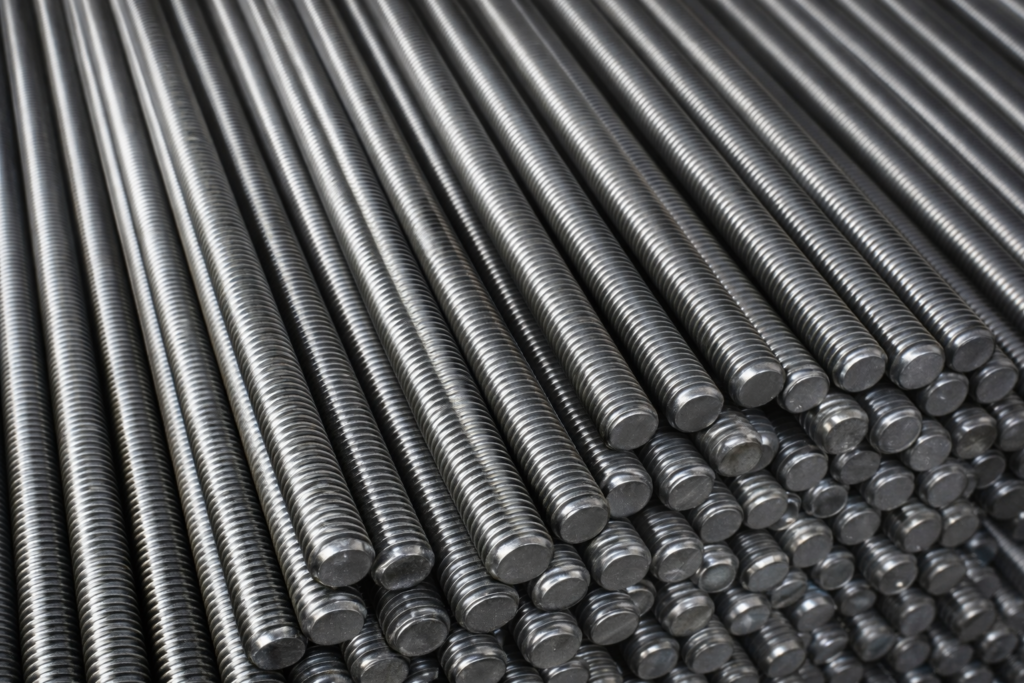
Threaded bars also known as all thread rods or stud rods are durable fastening components used in engineering and industrial applications. They are extremely malleable and withstand high strain and shear stress. Anchor rods are also very demanding in construction frameworks due to their peculiar lengths.
These steel bars are recognized by threads running from apex to rear, providing unmatched flexibility and versatility. These long, slender bars are fully threaded to securely pin or attach materials while resisting heavy pressure and tension. It sets them apart from standard bolts and screws.
In this guide, you’ll learn about threaded bars, their several types, the dimensions they use for mechanisms, and practical selection tips.
What are Threaded Bars?
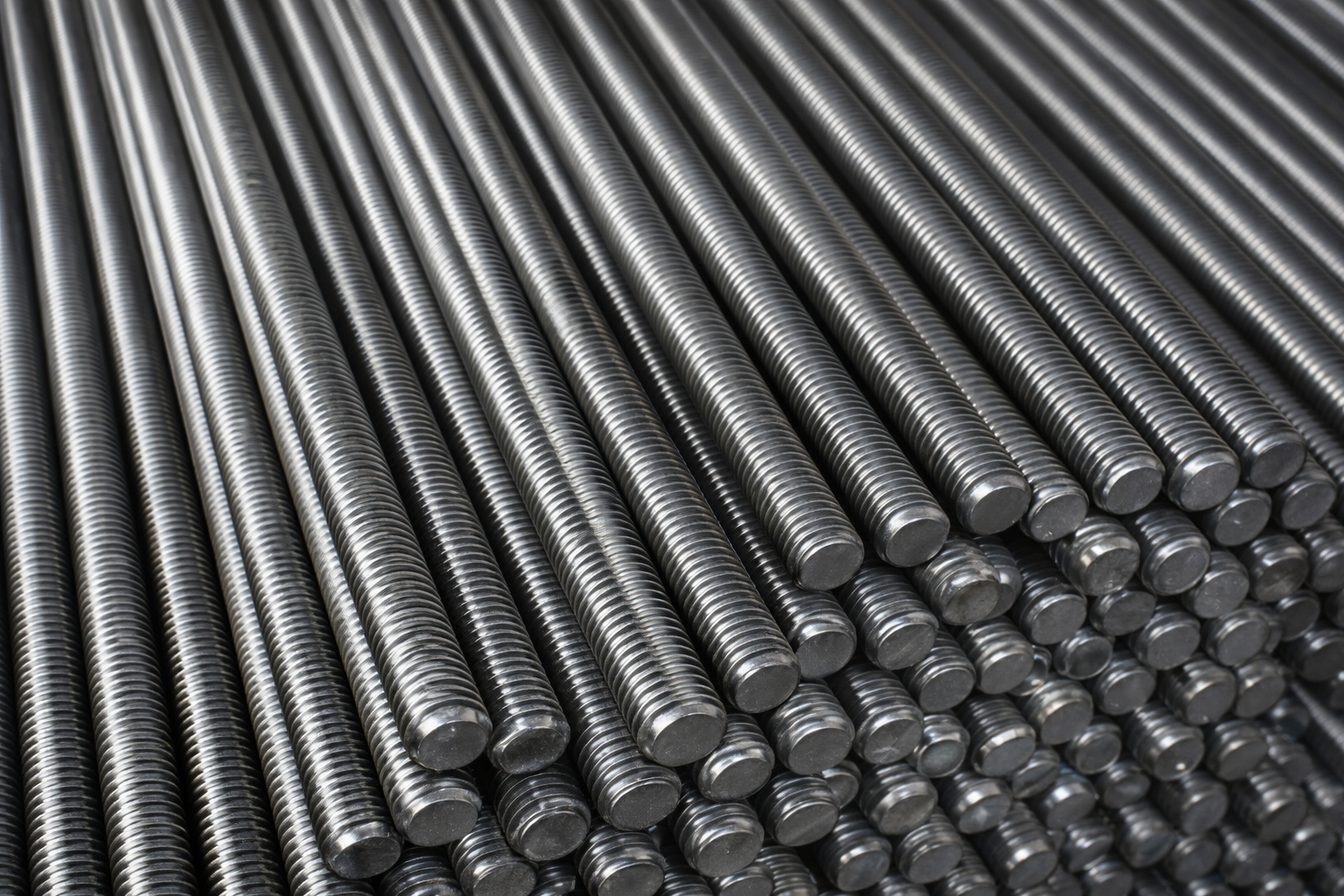
Threaded bars, also known as threaded rods, studs, or studding, are metal rods that have threads cut into both ends or along their whole length. These threads are typically designed to fasten nuts or other threaded components securely. They are often found in 1 metre length but can be cut to length and connected with coupling nuts.
Threaded bars are made from mild steel, stainless steel, brass, or aluminum; chosen for certain properties such as electrical conductivity, corrosion resistance, or transmission.
Different Types of Threaded Bars Every Engineer Should Know
1. Full Thread Rods
All threaded bars are the traditional threaded rods that span the entire length. You can use nuts and washers to secure components at every place along the length due to the continuous threading. Fully threaded rods are extremely versatile and ideal for high-strength connections, such as supporting concrete buildings.
2. Rods with Partial Threading
These rods feature threads along only a portion of their length, with a slick unthreaded area in the center. This provides you with an easily adjustable central area and the fastening power of threads when needed. Partially threaded rods are useful for applications such as furniture assembly, which require both fixed and flexible connections.
3. Double-Ended Threaded Rods
This twin threading allows you to securely fasten components from both sides. It is preferred for joining structural components such as columns and beams. Order now from Petrofast Middle East at affordable prices.
4. Metric Threaded Bars
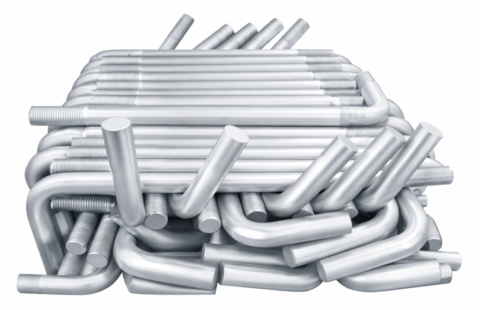
These rods are designed for heavy-duty anchoring, with one end bent or sunk in concrete and the other threaded to attach to a structure. Anchors or rods are used to secure almost all large construction projects, including retaining walls and bridges.
5. Hollow Threaded Rods
Hollow rods lessen general weight and permit wiring or different materials to skip through. This is why they’re popular in aerospace and specialist installations where both energy and reduced mass are important.
Key Applications of Threaded Bars in Structural & Engineering Projects
Threaded bars are used in many different industries and applications. Their main purpose is to give two or more components a strong and secure connection. They are extensively used in manufacturing, automobiles, aerospace, and DIY projects due to their sturdiness.
- Structural Support
Threaded studs are used for engineering purposes to reinforce masonry systems, which consist of bridges, homes, roads, and more in the UAE. Moreover, they’re generally used as anchor bolts, tie rods, or bracing portions to reinforce structural balance and tolerate external forces.
- Anchoring Components
When combined with nuts and washers, these anchor bars serve as efficient fasteners for binding certain components securely. The application is unusual in the context of machinery and industrial fixtures, as well as structural frameworks.
- Alignment and Adjustment
Steel threaded rods are also used to align and adjust components by imposing tension and compression. They support exact placement along with preserving structural alignment in mechanical assemblies and commercial equipment installations.
- Custom Manufacturing
Threaded bars provide incredible versatility in customized manufacturing applications. They can be cut, welded, or bent according to specific pattern preferences in multiple projects. This feature makes them ideal for manufacturing custom brackets, supports, frames, and other specialist components.
How to Specify Sizes and Measurements of Bars According to Your Project
Threaded bars are available in numerous sizes to deal with diverse project desires. The popular sizing is generally specific through diameter and thread pitch. Common diameter sizes range from as small as 6mm to as huge as 24mm; at the same time, thread pitches can vary from coarse to extraordinary, depending on the supposed utility.
Measuring threaded bars properly is important for sustaining compatibility with various additives. Here are options to degree a threading bar:
Measure Diameter: Estimate the diameter of the metallic bar with a caliper or a ruler. Also, degree the shaft’s widest factor for precise results.
Count Threads Per Inch:Next, figure out how many different threads there are in one inch of the threaded phase. This count number influences the thread pitch, and that’s necessary for picking reliable nuts or threaded extensions.
Verify length: Lastly, measure the threaded bar’s entire length from tip to where it halts. If you are selling them for a complex project, make sure to include the threaded quantity on both ends.
Wrapping Up!
Threaded bars might appear subtle, but their significance in numerous projects can’t be overstated. Threaded studs are essential in construction and production in addition to DIY tasks because of their structural energy for precise fastening and alignment.
Knowing their functioning, types, uses, sizes, and dimension strategies gives clients the understanding necessary to properly harness their versatility.
Petrofasr threaded bars are reliable for any project, whether you’re building a skyscraper, assembling fixtures, or designing custom furniture. Get a quote today to buy online for your complex projects all over the UAE & GCC.
FAQs
Are there any particular applications where threaded bars are not endorsed or suitable to use?
Threaded bars won’t be suitable for applications wherein particular alignment or movement is needed. This is due to the fact their rigid shape may also limit flexibility in assessment to one-of-a-kind fastening strategies like hinges or pivots.
Can threaded bars be used outdoors or in corrosive environments?
Threaded bars may be used outside or in corrosive environments; however, it’s critical to select substances collectively with stainless steel or galvanized metal. It is large to use corrosion-resistant coatings for sturdiness and to save you from corrosion.
Is there any safety precaution to be aware of while operating with threaded bars?
When running with threaded bars in excessive load or vital structural applications, it’s important to make sure the nuts are properly tightening. It prevents overloading or structural failure. Additionally, normal inspection and upkeep are vital to come upon any symptoms of damage or loosening.