Hex Bolt Types: Simple Guide for Building & Factory Use
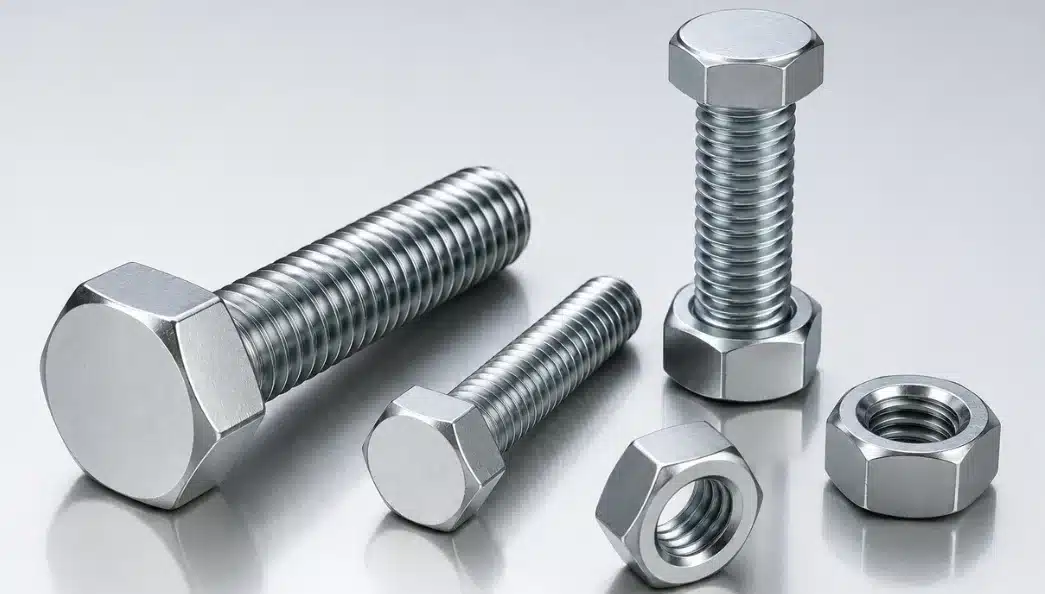
Hex Bolt Types: A Complete Guide for Industrial and Construction Applications Request a Quote Hex bolts are some of the most common pins used to hold things together in the world. They get their name because they have a six-sided top. That special six-sided head is what makes them so handy. You can use a basic wrench or socket tool to grip them and turn them from any side. Builders use them to connect heavy steel beams. Workers in the oil and gas fields use them to clamp large pipes together. Chemical plants use them in high-pressure tubes where a loose bolt could cause a big accident. They work great because they are strong, easy to use, and come in many types of metals and sizes. The reason we have so many hex bolt types is simple. Different jobs need different strengths, metals, and protective coats. A bolt that works fine inside a dry factory will rust and break quickly in salty ocean water. Picking the right bolt from the start saves money and keeps the job running smoothly. The Most Common Hex Bolt Types for Big Jobs There is no single bolt that works for every project. Learning about the different types of hex bolts helps builders and buying teams make smart choices. Every type is made to work best in its own special environment. Here is a list of the most common choices. 1. Hex Head Bolts: The Standard Workhorse Hex head bolts are the most basic type. They have a six-sided head and a threaded shank. There are several hex head bolt types categorized by their thread coverage and head dimensions. They come in a wide range of sizes and strength levels to suit different project demands. Petrofast Middle East supplies these across a full range of international standards. These bolts are available in multiple strength classes. The higher the class, the stronger the bolt. Lower classes are common in general construction. Higher classes are used where extreme load-bearing is needed. They are easy to install and work with most standard tools. That is why they appear in almost every type of project, from small machinery to large infrastructure builds. 2. Heavy Hex Bolts: Built for High-Load Structural Work Heavy hex bolts have a wider and thicker head compared to standard hex bolts. That larger head gives them more contact area with the surface. This makes them better at handling very high loads without the head pulling through. Many of the most demanding construction projects choose our Heavy hex bolts UAE suppliers for securing critical structural steel connections. This type of bolt is important because it meets a consolidated set of requirements that previously required referencing multiple older standards. That makes specification writing simpler and reduces confusion on job sites. These bolts are available with surface finishes including Black and Hot Dip Galvanized to suit different exposure conditions. 3. Structural Hex Bolts: Connecting Steel Frames Safely Structural hex bolts are made just for holding big steel frames together. They must pass tough tests to prove they can carry very heavy loads. Workers use them to build bridges, tall steel buildings, power towers, and large factories. Structural hex bolts UAE projects need bolts paired with matching nuts and washers. A supplier like Petrofast Middle East FZC sells them together as a complete set with heavy-duty nuts. This makes sure the whole team of parts stays strong and works exactly the way it was designed to under a lot of weight. The main difference between a structural bolt and a regular hex bolt is how you tighten it. Structural bolts must be twisted until they reach a very specific level of tightness and stretch. Workers must test and check this tightness on the job site using special calibrated tools. Stainless Steel and Alloy Hex Bolts: Battling Rust in Tough Conditions Bolted together, large structures face a significant challenge with rust. This is a truly serious issue in the Gulf region, where the air is saturated with water, the weather is extremely hot, and salt from the ocean contacts everything on a daily basis. Stainless steel hex bolts provide the ideal answer to these harsh surroundings. Petrofast Middle East FZC supplies stainless steel hex bolts UAE across a full range of austenitic, duplex, and super duplex grades. The right grade depends on how aggressive the environment is. Standard austenitic grades work well in general corrosive conditions. Duplex and super duplex grades are chosen when the environment is far more demanding. The key difference between standard and higher stainless grades is the alloy content. Higher alloyed grades contain more elements that resist chloride attack. Chloride is found in seawater and many industrial chemicals. So for offshore platforms and coastal structures, a higher-grade stainless is always the right call. Super duplex stainless steel is used in the most extreme places. These materials can hold much higher pressures and fight off harsher chemicals than normal stainless steel. You will find them in underwater tools, sea-water cleaning plants, and high-pressure chemical tanks. High Tensile Hex Bolts: Maximum Strength for Important Joints High tensile hex bolts are made from special alloy steel that has been baked and cooled in a process called heat-treating. This special heating step makes them much stronger than regular steel bolts. Workers use them in places where a broken bolt would be highly dangerous or cause a major accident. You can find these super-strong bolts in tall skyscrapers, long bridges, and heavy digging machines. For oil and gas applications, a supplier like Petrofast Middle East FZC supplies oil and gas fasteners in alloy steel parts specifically for high-pressure tanks, pipe rings, and valves. You need to be very careful in handling and installing these bolts. If you twist them too much they will break right in half. If it is not tightened enough, the entire joint will be weak and loose. Galvanized Hex Bolts: Long-term Rust Protection Galvanized hex bolts have a specific layer of zinc spread over their outer