The Role of Petrofast Hex Bolt Fasteners in Modern Engineering Applications
Hex bolt serve as one of the most commonly used fastener in technical and commercial programs, Hex bolts serve as one of the most commonly used fasteners in technical and commercial programs, prized for their robustness and reliability. For example, mechanical assemblies rely on them to secure components in heavy manufacturing, structural metal frameworks, automotive systems, equipment, and chemical processing units. Additionally, their hexagonal heads allow for reliable installation and precise torque control, ensuring consistent connections under both static and dynamic stress.
In this comprehensive guide, we will delve into the world of hex bolts. Specifically, we will analyze their features, types, applications, and the highest standards for properly using them.
Hex Bolt Overview
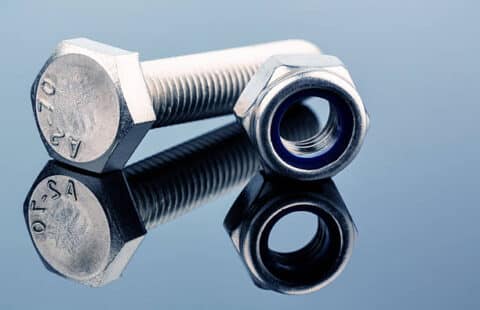
A hex bolt, also called a hex cap screw, is a fastener with a hexagonal six-sided head and threaded shaft. Typically, it is designed to be mounted in pre-drilled holes and secured with a nut or tapped hollow. Moreover, the hexagonal head has six flat sides that can be easily grasped and tightened using a wrench or socket.
Manufacturers often use stainless steel to produce hex bolts because of its exceptional resistance to corrosion. This quality makes premium hex bolts suitable for harsh environments such as marine applications and industrial plants, where exposure to moisture and chemicals is common.
Hex Bolt Vs Hex Cap Screw: Engineering Difference
Engineers commonly compare hex bolts and hex cap screws when selecting fasteners for commercial operations and infrastructure. The main distinction is their ASME-mandated tolerance barriers. For instance, hex cap screws feature finer tolerances which are ideal for applications that require precise alignment. These screws are quickly installed into tapped holes for a secure and durable connection. Conversely, hex bolts have looser tolerances; therefore, they produce quality work in common applications where precise measurements are not necessary.
Hex cap screws have a minimum body diameter of 0.245″ and a maximum dimension of 0.250″ for a ¼” nominal length, which indicates stringent dimensional control. On the other hand, using inappropriate fasteners in high-strain or precision-required applications might result in an unsuitable fitting and poor performance.
Explore Types of Hex Bolt Fasteners in Mechanical Engineering
Fully Threaded Hex Bolts
These hex bolt fasteners have persistent threading along the entire length of the shank. As a result, this design ensures maximum engagement with the mating threads, delivering a linear forward load distribution. They are usually employed in applications requiring excessive clamping stress and whole-thread contact. Furthermore, the screws are specifically designed for applications demanding reliable fastening and precise adjustment.
Partially Threaded Hex Bolts
Manufacturers create partially threaded hex bolts by combining an unthreaded shank with a threaded segment. Specifically, the unthreaded portion increases strength and improves alignment among assembled components. Because of this, the configuration reduces pressure sensitivity within the threaded area under combined loading circumstances. Moreover, engineers commonly use them in structural joints that experience bending and tensile forces.
Heavy Hex Bolts
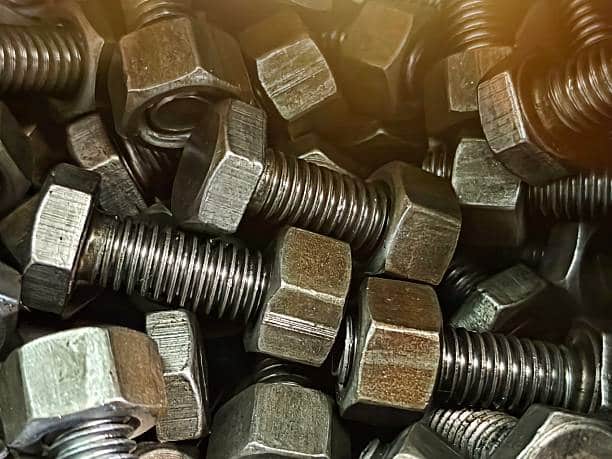
Heavy hex bolts distinguish themselves from standard hex screws by featuring wider bearing surfaces and larger head diameters. Consequently, this design enhances load distribution and resistance to deformation under high-pressure environments. Manufacturers typically produce them to meet the strict structural requirements of these environments. As a result, engineers widely use heavy hex bolts in manufacturing, construction, and industrial engineering applications.
Flange Hex Bolts
Engineers design flange hex bolts with a standard flange beneath the head to serve as an embedded washer. As a result, this feature reduces surface degradation by enhancing bearing proximity for more uniform load distribution. Furthermore, it increases resistance to loosening under dynamic loads and vibration. In addition, the integrated layout improves assembly efficiency by minimizing the need for additional washer components.
Applications of Hex Head Bolt in Major Industries
Robust Construction and Structural Steel
Hex bolts are essential in the manufacturing sector. For example, engineers use hex head bolts to secure structural connections in buildings and bridges. These bolts provide reliable fastening for steel frameworks for many infrastructure projects. Moreover, hex bolts are also important for the functionality and stability of industrial machinery.
- Structured connections in buildings
- Bridge construction
- Infrastructure Projects
- Mechanical fastening
Automotive Repairs
The automobile industry requires precision and reliability in every assembly. In particular, hex bolts have specific thread diameters and lengths, such as M8 × 20, to ensure a snug fit. As a result, hex head bolts keep engine components and chassis fasteners firmly attached even when they are vulnerable to high vibrations.
- Secure drivetrain assemblies
- Suspension brackets
- Engine mounting
- Trunk fasteners
Equipment for Water Filtration and Chemical Processing
Hex bolts often face harsh environments in water remediation and chemical processing. In these cases, B8 bolts offer excessive strength and corrosion resistance, performing properly under intense temperatures and chemical exposure. Additionally, 17-4 stainless-steel hex bolts offer increased power and durability, making them appropriate for high-temperature chemical processing.
- Equipment for Chemical Processing
- Water Purification Facilities
- Applications that need to be resilient to oxidation and chemical exposure
Heavy Machinery & Mining Operations
Hex bolts strengthen the durability of heavy machinery in mining operations. Specifically, their high tensile strength ensures that connectors can withstand extreme tension and strain. In addition, standardized sizes make it easier to protect and substitute. The hexagonal structure provides robust fastening and stops loosening under dynamic loading.
Heavy hex nuts constructed from high-grade metal can experience mechanical wear and strain. Their sturdy design maintains structural integrity at different temperatures, which engineers require in dynamic applications.
Wrapping Up!
Hex bolts play an important role in modern engineering. Not only do they provide a reliable and environmentally friendly method to bond components in a wide range of industrial applications, but engineers must also thoroughly understand their structure, thread arrangement, material composition, and installation factors to ensure joint integrity, optimal preload, and long-term supplier reliability under multiple load conditions.
At Petrofast, we manufacture precision-engineered hex bolts in compliance with global requirements. Throughout the production process, we keep dimensional accuracy and mechanical power in mind. Therefore, our products are designed to supply steady overall performance under static and dynamic loads in demanding service situations.
Contact our experts to buy fasteners online in bulk at affordable prices in Dubai!
FAQs
How can you identify the grade of a hex bolt?
Check the top markings. Each grade uses a completely unique image or variety.
Grade 2: No markings
Grade 5: Three radial strains
Grade eight: Six radial strains
How do you measure the length of a hex head bolt?
Measure from the flat bearing surface underneath the top to the tip of the bolt.
Do not include the height in the measurement.