Ultimate Guide to Anchor Bolt Types | Petrofast Middle East
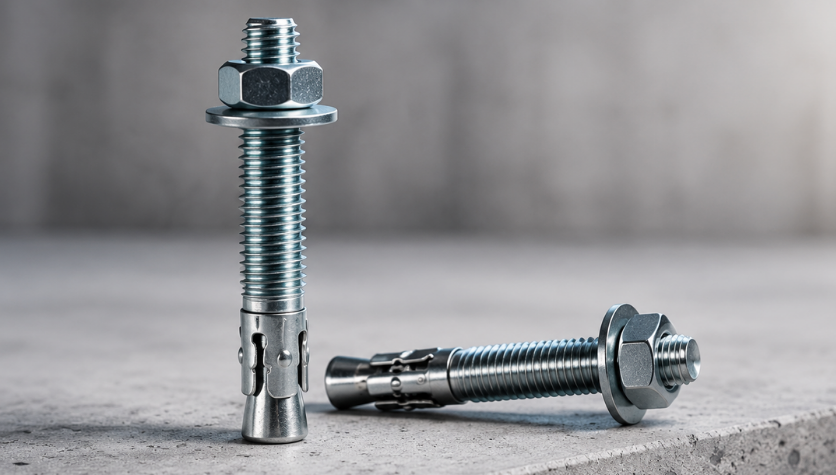
Building Secure Foundations: How to Choose the Correct Anchor Bolt Types for Tough Projects Request a Quote Whether you’re building a pipeline support in Sharjah, installing heavy machinery at an Abu Dhabi refinery or erecting a steel structure on a construction site across the GCC, the bolts that keep everything grounded are more important than most people realise. Choosing the wrong one can lead to loosening , corrosion or even structural failure . Choosing right locks in your project for decades. This guide will take you through all the major types of anchor bolts used in industrial and construction projects today, with technical details drawn from international standards, so you can make an informed decision every time. What are Anchor Bolts and Why Are They Important? An anchor bolt is a fastener used to attach structural and non-structural elements to concrete or masonry . An anchor bolt is not your typical hex bolt used to connect two pieces of metal together. An anchor bolt is embedded or drilled into a base material with one end sticking out to receive a nut, plate or fixture. They are used in almost every industrial sector from oil and gas and petrochemical plants to bridges, towers and commercial buildings. Selecting the correct anchor bolts for construction is a critical engineering decision in the UAE and the wider GCC region where construction activity is high and environmental conditions are harsh. At Petrofast Middle East FZC, is a leading manufacturer and supplier of all types of structural anchor bolts & foundation anchor bolts to the clients GCC as per International standards like ASTM F1554, ISO 898-1, and EN 10025-2. Anchor Bolts Types, Uses, and Applications of Anchor Bolts Not all anchor bolts are the same. The type will depend on the base material, loading requirements, environmental conditions and whether the installation is done before or after the concrete is poured. A detailed breakdown of each of the major types is given below. L-Shaped Anchor Bolts; The Workhorse of Foundation Work The L-shaped anchor bolt is one of the most frequently used foundation anchor bolts in industrial construction. The L-shaped bend is embedded into the wet concrete before it sets and the threaded end protrudes above the surface to receive nuts and washers. The bend resists pull-out forces, dislodging the bolt. This makes it perfect for attaching column base plates, machine frames and equipment pedestals to reinforced concrete foundations. Petrofast provides L-shaped anchor bolts for the oil & gas and heavy industrial industries per ASTM F1554 grades 36, 55, and 105.Available in Hot Dip Galvanised (HDG) or plain black finish. In corrosive environments, stainless steel anchor bolts in grades SS304, SS304L, SS316 and SS316L are also required. They comply with the standard rules of ASTM F1554, EN 10025-2 and ISO 898-1.You can select material grades such as Grade 36, 55, 105 (ASTM), S275JR and S355JR (EN). Available finishes: Hot Dip Galvanised, Black and Bright Stainless Finish. J-Bolt Anchors; Light to Medium Load Fixing As the name suggests, the J-bolt anchor is a hook shaped like the letter J at the bottom. This configuration provides pull-out resistance by hooking into the cured concrete. The J-bolt anchor is a popular choice for lighter structural applications such as light poles, sign posts, pre-engineered steel buildings, and smaller equipment bases. They are also a popular choice for anchor bolts for construction of mid-rise buildings and utility installations throughout the UAE. Like L-bolt anchors, J-bolt anchors are installed in wet concrete before it sets. The hook end locks into concrete and the threaded end accepts a standard flat washer and hex nut. Petrofast produces J-bolts to ASTM F1554 and ISO 898-1, with grades and finishes to the client project specifications. They come in common grades of 4.6 and 8.8 (ISO) and 36 and 55 (ASTM). Available in black, zinc plated or hot dip galvanized finish. These bolts are ideal for supporting sign structures, utility poles and street light poles. Wedge Anchor Bolts; Maximum Grip in Hardened Concrete The wedge anchor bolts are the best choice when you can not install the bolts before pouring the concrete. A wedge anchor bolt is drilled into hardened concrete through a predrilled hole. As the nut is tightened, a wedge shaped clip at the bottom of the bolt expands outward gripping the sides of the drilled hole from the inside. This mechanical expansion creates a very strong, reliable connection. Wedge anchors are a type of post-installed expansion anchors and are commonly used throughout the GCC for structural retrofitting, installation of machinery supports in existing slabs, and for securing racking or shelving systems. Petrofast is offering this kind of Heavy Duty Anchor Bolts in Mild Steel and Stainless Steel 304 and 316 with HDG and Zinc Plated surface finish as per ASTM F1554 and ISO 898-1 standards. Contact us for available sizes and grades from our full product line for available sizes and grades. These fasteners are manufactured from mild steel, 304 stainless steel and 316 stainless steel. They are ideal for post-installed heavy equipment, building retrofit, column-base repair to cured concrete slabs. Chemical Anchor Bolts; The High-Performance Bond Solution For applications that demand the highest load capacity, particularly in cracked or weak concrete, chemical anchor bolts are the correct choice. Instead of mechanical expansion, a chemical anchor bolt uses a two-component resin or adhesive which is injected into a pre-drilled hole. The anchor rod or threaded bar is then inserted into the hole filled with resin and the chemical compound is cured to create an extremely strong, monolithic bond between the rod and the concrete. The resin transmits the stress over the entire bonded length. Chemical anchor bolts do not apply any expansion stress to the surrounding concrete. They are therefore ideal for use near the edges of concrete elements, in hollow masonry and in thin concrete sections where a wedge or sleeve anchor might cause cracking. They are also the preferred anchor bolts for oil and gas facilities where vibration loads are present. Petrofast